
SCHADE – Reclaimer Conversion Engineering for Cohesive Limestone
16. September 2026
Uncategorized, SCHADE Lagertechnik
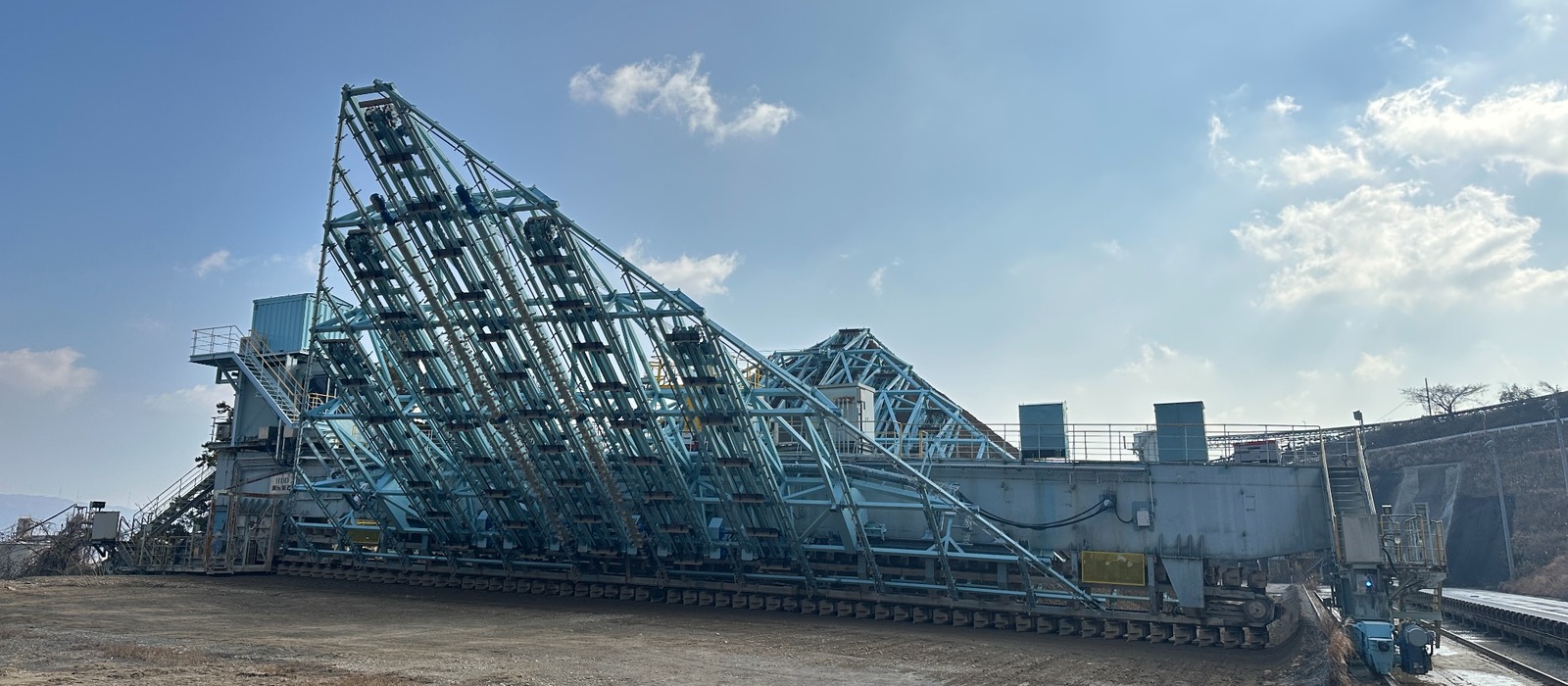
From 100 to 600+ t/h: Conversion engineering for cohesive limestone
How can an existing non-SCHADE bridge-type reclaimer designed for approximately 600 tonnes per hour achieve its intended capacity when challenging material behaviour limits actual performance to around 100 t/h? A new SCHADE Case Study shows how material investigation, DEM analysis and targeted conversion engineering were combined to develop a reclaiming concept around the actual behaviour of the cohesive limestone.
When the material defines the challenge
At a cement plant in the Far East, an existing non-SCHADE bridge-type reclaimer was generally in good condition and well maintained. Yet when handling the site’s cohesive limestone mixture, the machine was achieving only around 17% of its intended capacity.
Laboratory testing showed that the limestone became increasingly cohesive with rising moisture. Samples from the reclaiming pile, stacking pile and open quarry showed moisture contents of approximately 5.5–7.5%. The challenge was therefore not simply to modify the machine, but to understand the interaction between the bulk material, the existing equipment and its structural interfaces.
Engineered around the actual material behaviour
Before defining the conversion, SCHADE investigated the bulk-material behaviour and assessed the existing machine and its interfaces. Material testing, a 3D laser scan and DEM analysis provided the engineering basis for a new reclaiming concept designed to achieve at least 600 t/h across the investigated material conditions while integrating the new equipment into the existing reclaimer.
A new reclaiming concept for the existing machine
Based on the investigated material behaviour, SCHADE developed a new reclaiming concept specifically for the existing non-SCHADE bridge-type reclaimer. Two newly manufactured SCHADE active harrows with patented SCHADE Pile Crackers (active ploughs) form the mechanical basis of the conversion.
The new configuration was dimensioned using loads derived from the investigated bulk-material behaviour. Stress and buckling analyses defined the required structural adaptations and stiffening of the existing bridge and harrow-tower structure.
Mechanical, structural and electrical engineering were therefore developed as an integrated conversion concept, allowing the new reclaiming equipment to be incorporated into the existing machine and its interfaces.
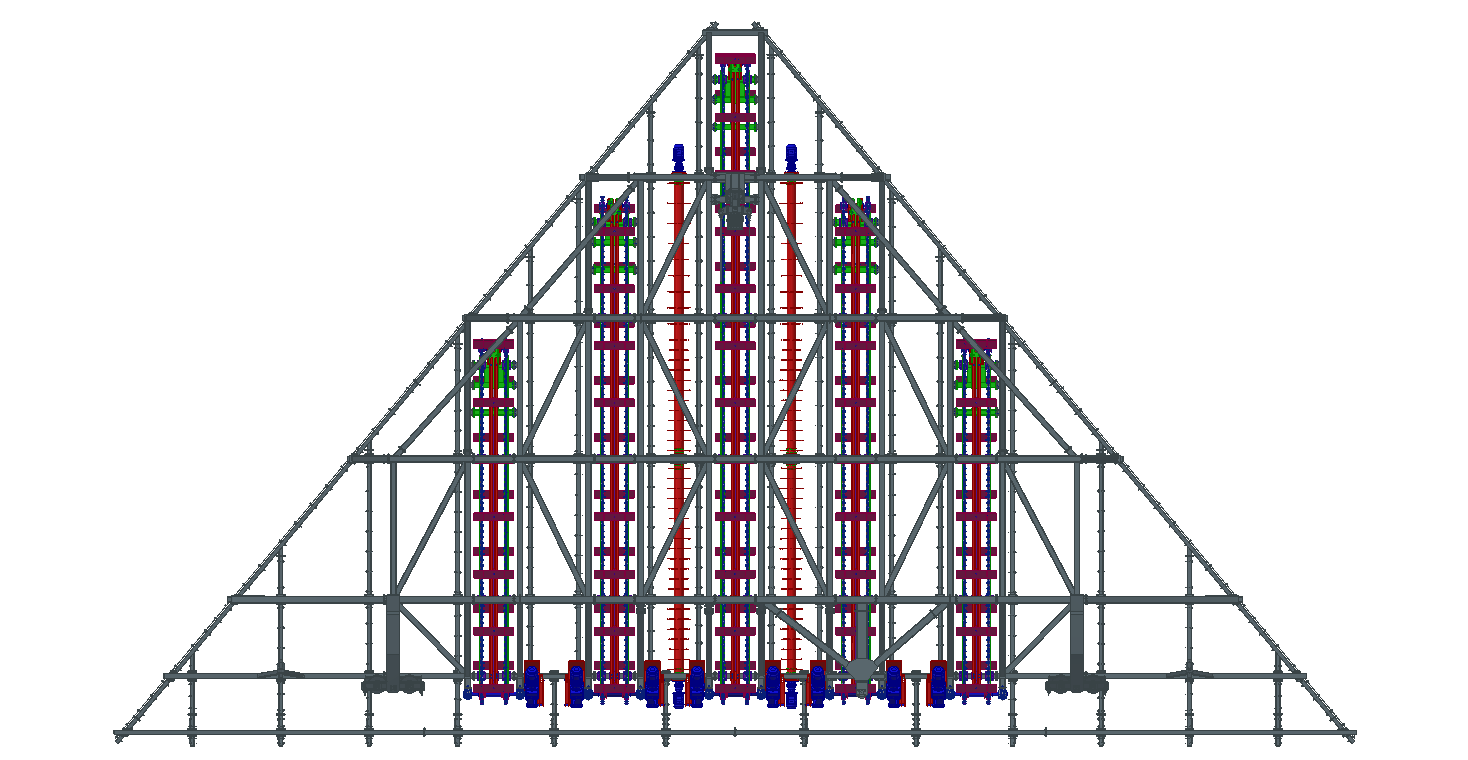
From material behaviour to machine design
≈ 4% moisture
DEM-derived loads
600 t/h
600+ t/h
The engineering behind the conversion
The new SCHADE Case Study provides further insight into the engineering behind the project – from bulk-material investigation and existing-machine assessment to 3D laser scanning, DEM analysis and the development and integration of the new reclaiming concept.
Discover how material-specific engineering transformed the requirements of cohesive limestone into the design basis for the new reclaiming system.
Engineering solutions for demanding bulk-material handling applications
SCHADE develops customised solutions for the storage, stacking and reclaiming of bulk materials worldwide.
For further information or to discuss your project, please contact our SCHADE team:



Contact
If we can help you with any further information, please use the contact form to get in touch.
You will receive an immediate automated acknowledgement, and we will respond to your enquiry as soon as possible.
Many thanks
AUMUND. SCHADE. SAMSON.